Showing posts with label French green clay. Show all posts

Thursday, 18 February 2016

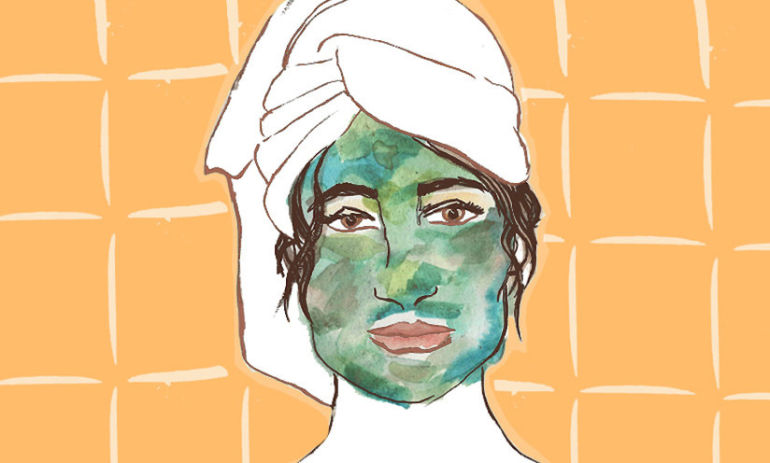
A DIY French Green Clay Mask That Will Refresh Your Skin

I'm a professional insomniac. Despite having tried nearly everything to fix my sleep woes, I continue to toss and turn most nights. It’s an unfortunate symptom of a chronic illness, so it’s not likely to change anytime soon.
As expected, the lack of sleep takes a toll on my skin, so to combat my perpetual shortage of shut-eye, I'm eternally obsessed with finding a green beauty routine that keeps my skin looking as healthy as possible.
In the wee hours of a recent snooze-free morning, I lay in bed thinking of a way I could achieve great-looking skin even as my precious sleep eluded me. Enter thoughts of French green clay.
This mineral-rich mud forms a perfect base for a DIY mask that both exfoliates and revitalizes, and a protein-packed egg yolk provides an easily absorbable combination of nutrients to restore tired skin.
The day after my all-night bout of insomnia, a friend asked me why my skin looked so good and whether I had changed my beauty routine. I just smiled at her and said, “It’s thanks to insomnia!”

Eye of Horus

French Green Clay Mask To Revive & Refresh Your Skin

This clay mask takes about five minutes to prepare and contains a handful of get-your-skin-glowing ingredients. Best of all, these items are easily found online and at your local health or grocery stores, making it a cinch to look like you got a full night’s sleep (even if you didn’t).
Ingredients
  • 1 tablespoon French green clay (available from a health food store or online)
  • 1 teaspoon coconut flour (you can also use oat flour, almond flour, corn flour, etc.)
  • 1 organic egg yolk
  • 3 teaspoons filtered water, spring water, or aloe vera juice
  • 2 drops geranium essential oil (optional, for normal skin)
  • 2 drops lavender essential oil (optional, for acne-prone and sensitive skin)
  • 2 drop chamomile essential oil (optional, for dry skin)
  • 1 teaspoon avocado, jojoba, sunflower, or olive oil (optional, for dry skin)
Preparation
Combine the first four ingredients in a bowl. If you have dry skin, add your oil of choice (avocado, jojoba, sunflower, or olive oil). Next, gently mix in the two drops of your preferred essential oil.
Please note that you can still use this mask even if you don't add any oil or essential oil — a mask using only the base will still slough off dead skin and leave your complexion refreshed.
Now you’re ready to apply the mask!
Cleanse your face with warm water to open your pores and remove makeup. Gently pat your face with a towel until there’s just a little moisture left on your skin.
Use your fingers to apply a thick layer of the clay paste to your face, avoiding the eyes, eyebrows, and lips. Let the mask sit for 15 minutes or until dry. Then carefully wipe the mask off with a wet, warm washcloth.
Follow up with your favorite toner, moisturizer, or facial oil. Ta-da! Gorgeous skin.
Use once or twice a week for best results.

Thursday, 15 October 2015

Why Clay Is The New Secret Weapon In Your Skin Care Routine

Clay masks. We use them, we love them, but do you really know what type of clay is best for your skin? Each one has unique properties that make it more or less beneficial for a particular skin type. For example, French green clay is beautiful for oily, troubled skin but disastrous for dry skin.
Let’s delve deeper and figure out what clay your skin will love, and what you should stay away from.
Kaolin Clay
The most versatile and widely used clay, Kaolin clay is found in soil that's developed from the weathering of rocks in hot, moist climates (think rain forests). It has a soft, fluffy appearance that blends particularly well with water. It adds a nice slip to products, which may explain why it pops up in everything from masks to cleansers. It also gently exfoliates, cleanses, and stimulates the skin but isn't particularly effective at drawing oil from pores.
Who should use it: Kaolin clay is wonderful for dry, sensitive, aging skin that doesn't need any help with excess oil.
Who should avoid it: Kaolin clay isn't so helpful for those seeking to eliminate oil or combat blemishes.
French Pink Clay
This gorgeous, rosy clay is a combination of red and white clays, and is considered the mildest of all clays. It gently but effectively purifies even the most sensitive skin. It successfully draws surface toxins from the skin, without overdrying it. Additionally, it softens, plumps, and refreshes the skin, and with consistent use, helps minimize pores.
Who should use it: It's ideal for skin that's easily irritated or prone to redness.
Who should avoid it: No one, really. It's gentle enough that it works for almost all skin type. 
Moroccan Rhassoul Clay
This mineral-rich, versatile clay is mined deep beneath the Atlas Mountains in Eastern Morocco. It contains a high percentage of silica, magnesium, potassium, and calcium, which all help to nourish and heal the skin. Additionally, Rhassoul clay is known to reduce dryness and flakiness by regulating skin’s natural oil balance while improving skin’s elasticity, firmness, and texture.
Who should use it: It's perfect for almost all skin types, but especially those with dry skin. 
Who should avoid it: No one, really.
Fuller’s Earth 
This fascinating clay (sometimes known as a powder) has intense drawing properties, which may explain why it's found its way into a number of industrial settings. Containing various minerals, including magnesium, quartz, silica, iron, calcium, calcite, and dolomite, Fuller's earth is a natural by-product of volcanic glass transforming into solids.
Originally used by textile workers, or “Fullers,” to remove oil from sheep’s wool, when used in skin care, this clay is the perfect foil for oily skin and scars, or other skin discoloration.
Who should use it: Its drawing capabilities make Fuller's earth clay particularly beneficial for oily and acne-prone skin. 
Who should avoid it: Anyone with dry and/or sensitive skin may find it a bit too stimulating.
French Green Clay
Like Fuller’s earth, French green clay has tremendous absorbing powers. It easily and effectively draws oils, toxins, and impurities from deep within pores. You may actually feel a slight tingling sensation when using this clay. This stimulating action brings blood to the face, resulting in a more refreshed, revitalized, toned appearance.
It's also incredibly nourishing for your skin since it contains actual decomposed plant material, meaning it's very nutritious.
Who should use it: French green clay is perfect for troubled skin types in need of deep detoxification.
Who should avoid it: It may be a little too active for skin that's fairly normal.
This post was adapted from the author's site, seedtoserum.com.
Illustration by ChloƩ Bulpin for mbg