Showing posts with label Eckhart Tolle. Show all posts

Tuesday, 30 August 2016

You Are Not Responsible for Anyone Else’s Emotions

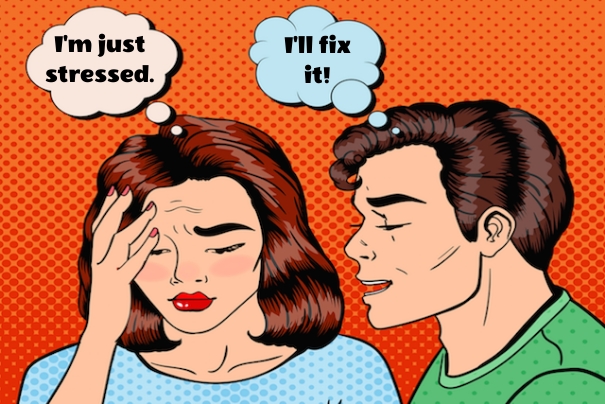
Fix your feelings


“Rather than being your thoughts and emotions, be the awareness behind them.” ~Eckhart Tolle
“I don’t believe you,” I jutted out my chin like a petulant toddler. Collapsing back into the tufted leather loveseat, I conceded, “I want to believe you, but I can’t.”
My therapist had just explained to me that I am not responsible for regulating other people’s emotions. My mind couldn’t process this truth.
There were too many decades of owning the moods of those around me.
In my younger years, if a parent was stressed, I felt it was up to me to calm them down. I prided myself on acting as a mediator between my siblings.
In high school, I drove my boyfriend crazy trying to cheer him up when he was in pain from frequent sports injuries. Later, I would allow other boyfriends to dictate how I was feeling each day, according to their mood.
And here my therapist was pointing out that it wasn’t up to me to help other people regulate their emotions. I had been doing it wrong all these years.

Undoing “Good Daughter” Habits

If you struggle with this, like me, chances are there was some chaos in your early years. I’m not necessarily talking about major trauma (although that may have occurred), but as a child you found yourself trying to compensate for the emotions of those around you.
The good news is that you can break free from this habit.
Trust me. It’s necessary for your mental health and for the well-being of your relationship to let this go.
As my therapist would say, even within a marriage it’s not my job to regulate the emotions of my spouse. I’m responsible for my own emotions. And it turns out that I’m not very good at helping “fix” my husband when he is stressed.

Changing the Dynamic

My first chance to change this pattern came in the form of a Saturday breakfast at a local coffee shop.
You know that feeling you get when you place your order with a trainee, and you have zero confidence that you are going to get what you ordered? It was one of those situations.
Thirty minutes later, our order still hadn’t arrived. My husband was getting agitated, and I could feel my blood pressure rising in response. It suddenly occurred to me that this was my big opportunity to approach things differently.

Step 1: Observe.

I noticed my husband was grumpy. I watched his scowl and listened to him mutter.
I noticed my heart race. I noticed that I wanted to say something to make it better.
I also noticed that I wasn’t upset about our food order. I had my coffee. I was okay to wait.
It was my husband who was upset, not me.

Step 2: Own your emotions.

If I am feeling stressed, I know how to calm myself down: pay attention to my breathing, reframe, and refocus.
But in this situation, if I were by myself I would have been fine. So there was nothing that I needed to do at that moment to deal with my own emotions.
I just needed to fight my urge to take on my husband’s frustration.

Step 3: Give the other person space to regulate themselves.

“Are you mad?” I timidly asked my husband.
“Nope,” he said, “just hungry.”
“Okay. I’m gonna just sip my coffee and read.”
“Thank you for not trying to fix me. I will be better after I eat,” my husband mumbled as he scrolled on his phone.
Ouch. I actually got thanked for leaving him alone. Further reinforcement that I would have been making it worse by taking on his frustration.

Step 4: Relax.

The world is not going to end if my husband is “hangry.”
My brain was trying to tell me that I was in danger, but sometimes our brains give us the wrong information.
My husband is a mild-mannered man. We’ve fought less than five times in fifteen years together—and it was me doing the yelling. I was definitely not in danger.
I was okay. He was going to be okay.
I just needed to let go of my fear that something would go horribly wrong if I didn’t intervene.
And guess what?
Everything was okay.

An Exercise in Humility

It’s hard to let go.
But the key insight in this process is that, even within a committed relationship, each person is responsible for themselves. We must give each other the opportunity to manage our own emotions.
If you are with somebody who doesn’t have the skills to regulate themselves, that’s a separate conversation. Do they want to learn those skills? How would they prefer to learn: a therapist, a book, or a trusted coach? Even so, it’s not your job to force them to acquire those skills.
We can only own our behavior. The world does not rest on our shoulders.
And the irony is, when we step back and let go of control, the fear starts to go away. We feel freer to relax.

Practice Makes Perfect

I encourage you to think of the last time that you tried to compensate for your partner’s frustration or stress. Think about what you could have done differently, now that you are more aware.
Even if you don’t manage to navigate all four steps smoothly, reflect afterward what went wrong and decide what you will do differently next time.
You’ve got this.

Tuesday, 16 February 2016

A Simple Sentence That Helps When You Feel Overwhelmed

Woman Hiding Under Pillow
“Realize deeply that the present moment is all you have.” ~Eckhart Tolle
Days after the initial divorce from my ex-partner, I wanted to meet two very close friends in the city. I knew they would be loving and supportive and that the experience would good for me. But I was so grief stricken and overwhelmed with emotion that even leaving the house felt like a monumental effort.
Sitting on the edge of my bed, picturing all the steps it would take me from where I was now to where they were seemed insurmountable. Normally, I would have jumped in my car and traveled to them with ease. But I wasn’t at home; I was staying with my family and I didn’t have a car.
Being in unfamiliar territory, there was the challenge of working out the public transport timetable (not one of my strongest traits even at the best of times), the fear of breaking down on the bus, and a general air of vulnerability and shame.
Weeping silently, I considered simply staying at home. But the idea of being alone brought a fresh wave of pain. The thought of spending the morning by myself in an empty house was too much to bear.
I was caught between two painful ideas: stay at home alone with my grief or face the anxiety of traveling in a fragile state.
Thankfully, my years of meditation practice came to the rescue and I heard an inner voice say, “Focus on the very next step.”
A sigh of relief escaped my lips as I realized that I didn’t have to travel all the way to the city to meet my friends. I just needed to do the very next thing.
gave myself permission to only focus on what was in front of me. I didn’t have to go anywhere I didn’t want to. I didn’t have to do anything I didn’t want.
All I had to take was the very next step, without thought for what came after or commitment to a particular outcome.
First up, get dressed. I didn’t think about the fashionable choice; I simply focused on the process of dressing. One leg in the pants, second leg in. Pop the t-shirt over my head. Breathing deeply each time and moving slowly but surely.
This simple act was enough to undo me. A fresh flood of tears ran down my face, as the pain and shame hit me. I couldn’t do this. I should be handling this better. Why couldn’t I just go and meet my friends like a “normal person”?!
Drawing deep on all my training, I put one hand over my heart and one on my belly. I felt my breath moving in and out, my belly rise and fall. Sinking into this feeling of presence, I practiced a little self-compassion.
Recognizing that I was experiencing a moment of suffering, just like a “normal person,” I was able to send some kindness to my tender heart. Just as I would have comforted a hurting friend, I soothed my nervous system with gentle thoughts and deep breaths.
Once again, I heard the voice: “Focus on the very next step.”
So I did. I walked to the bathroom to brush my teeth. Not so I could go and meet my friends all the way in the city, but simply to experience the sensation of brushing my teeth.
Next, I placed each object into a bag that I may need if I was leaving the house. Not that I was necessarily leaving the house. It was simply a task of placing objects, one by one, into a bag. Keys, wallet, phone…
Then, a short investigation. What bus would take me from the house to the city? A simple act of curiosity. Information gathering. Just a little research.
I repeated each task in this same fashion. Slow, deliberate, present. Without focusing on the reason or the end result of each exercise, I was able to complete each one with full attention. This presence helped me feel calm and secure throughout the entire journey.
Breathe, walk out the front door. Breathe, wait at the bus stop. Breathe, watch the suburbs roll past the window. Breathe, walk step by step to the meeting place.
I made it all the way to the city and fell into the arms of my friends. There were tears of relief as I realized I’d completed the “insurmountable journey” by taking it one step at a time. The time we spent together was nourishing and healing. The sense of quiet pride at making it this far was restorative.
When I focused on the very next step, I was able to overcome the devastating emotions and inertia. And in the weeks to come, although I faced many difficult days, this mantra went on to help me overcome overwhelm each time.
If you’re facing a challenging transition, it’s easy to feel swamped by a tidal wave of emotions and thoughts. So when you’re feeling overwhelmed, let go of the myriad of decisions and actions that you need to take. Simply focus on the step that’s right in front of you.
You may not even know all the steps you need to take—and that’s okay too. You don’t need to know the end before you start. You simply need to take the immediate action that is required right now and that will lead you further down the path.
If you focus on the very next step, you’ll be able to release overwhelm and get through any transition you face.

Sunday, 14 February 2016

5 Spiritual Quotes that Reveal the Truth About Finding Love

This post is part of a series by Shelly Bullard — it’s a primer on raising your vibration and attracting your soul mate. For the next five days, we’ll post one article offering the foundational elements you need to go deeper in the search for self-love and the love of your life. When you’re ready to take the next step, check out Shelly’s course: How to Attract a Partner Who’s Ready for Deep, Devoted Love.
Great spiritual teachers provide us with some of the most meaningful insights about love.
Often they’re not talking about a love that's limited between to two people. They're usually talking about a larger, more pervasive type of love: a love that we're each sourced from, a love that encompasses us all.
It's this all-encompassing love that's so important for us to understand if we want to create incredible relationships, because it's this love — the big love — that's the foundation for all the connection, intimacy, and ultimate fulfillment we experience in our lives.
Below are quotes from five infinitely wise, love-devoted teachers. If we listen to their messages closely, we’ll discover the gems that guide us to creating the love we truly desire.

1. “The power is in you. The answer is in you. You are the answer to all your searches: You are the goal. It’s never outside.” —Eckhart Tolle

Eckhart’s quote starts us out with the truth of all truths: You are what you’re looking for.
While he isn't speaking directly about love, this message reveals a fundamental truth about love: It’s inside you.
Finding love within is a foundational practice to attract love in relationships. If you're not grounded in love within yourself, it’s easy to get confused and believe that this goal is another person, that love is an external experience. This misconception is actually what keeps love, in all forms, away from us.
To create anything in your life, you have to know that it starts from within you. You are the answer to feeling connected. You are what you’re looking for. By internalizing this truth, you create a solid foundation for manifesting love in all aspects of your life.

2. “Love should be like breathing. It should be just a quality in you. Wherever you are, with whomsoever you are, or even if you are alone, love goes on overflowing from you. It is not a question of being in love with someone. It is a question of being love.” —Osho

In this quote, Osho reminds us that love is a quality that we already have within ourselves. Not only that, but it’s a quality that we can feel with others as much as we can feel on our own.
The experience of love is not dependent on other people because it’s simply what we are. It can be as normal as breathing. It can be our nature — if we allow it to be.
Practice being love. Let it flow through you the way breath does. As you become the essence of love, it has no choice but to permeate all of your life.

3. “Nothing ever goes away until it has taught us what we need to know.” 
—Pema Chödrön

Chödrön is not speaking directly about relationships here, but she’s pointing to an experience many of us have in romantic love.
Whether it’s attracting unavailable partners or perpetually feeling unsatisfied in relationships, the patterns we find ourselves stuck in won’t dissipate until we’ve learned what we need to know. Luckily, the lesson always distills down to the same thing:
When you feel disconnected from love, you’re being asked to remember who you are. You are being called to remember that you are love.
When we feel unworthy in relationships, it means we have forgotten the truth of who we are. When we feel unseen, unknown, and un-cared for, we have forgotten that we are sourced from love.
To overcome obstacles in relationships, we must learn what these challenges are pointing us to. In the simplest terms, we must remember ourselves as love.

4. “Let yourself be silently drawn by the strange pull of what you really love. It will not lead you astray.” —Rumi

Rumi reminds us that the love within is always leading the way. The strange pull within is your intuition. It's love’s way of communicating with you.
If you’re willing to get quiet enough to hear love’s voice, and if you're brave enough to follow its call, you will be led to create a life (and a relationship) that's directly aligned with love. As Rumi promises, you will not be led astray.

5. “I’m talking about the essence of love itself, the essence that is within all the flavors of love. This is the real spiritual love, which is a deep unspoken connectedness. Only this love has the power to transform our relationship to being alive, our relationship with each other, and our relationship with the world. This love is timeless. This love is uncontained.” —Adyashanti

Underneath every expression of love — whether it’s romantic love, friendship, love for a child, or love of the Earth — we find the same distilled pure form of love.
Love is an energy. It’s a frequency that we align to within.
This love is timeless, unconditional, uncontainable, and ever-present. This isthe big love.
When you merge with this energy, the experience of love will overflow from your being and touch every aspect of your life. This is the love that changes the world. This is the truth of who you are.
Please leave a comment sharing your favorite quote about love.

Wednesday, 17 June 2015

How to Believe in Yourself Again

How to Believe in Yourself Again
“Believe in love. Believe in magic. Hell, believe in Santa Clause. Believe in others. Believe in yourself. Believe in your dreams. If you don’t, who will?” ~ Jon Bon Jovi
There are times in life when things don’t go our way. Times when we meet with failure, defeat, fear and insecurity. And when that happens, because we are so used to taking our sense of worth from the things we do, from our worldly successes and daily accomplishments, we inevitably start to doubt ourselves. We start to doubt our ability to make our dreams come true, we start to doubt our worth, we start to doubt the people around us and we start to doubt whether we will ever feel safe and secure in this world.

1. Make peace with where you are.

“When we say to you, make peace with where you are, we want you to make peace with where everyone is; we want you to make peace with the world events; we want you to make peace with where your friend is in relationship with where your friend wants to be. We want it to be all right with you where anybody is.” ~ Abraham
There’s no need to fight against what is. Resistance is futile. If you want to get out of this dark world you are now in, back to feeling safe, happy and secure, and back to believing in yourself, you first need to make peace with where you are, with how your life looks at this moment, and with everything that led to this situation. Only by doing so will you have the necessary power and energy to change your present life situation.

2. Trust that life will never give you more than you can handle.

“Some changes look negative on the surface but you will soon realize that space is being created in your life for something new to emerge.” ~ Eckhart Tolle
Even though at times it feels as though life is against us and that it doesn’t like us very much, the truth of the matter is that life loves us a great deal. And because it loves us so much, it wants us to constantly stretch, to grow and to discover more about who we truly are and what we are capable of being, doing and having. The way I see it, it’s all about perception and how you choose to look at things. If you shift your mindset, no longer looking at your challenges as burdens but rather as gifts and blessings in disguise, you will soon realize that life will never give you more than you can handle. And if life gives you a lot, it’s because you can handle a lot.

3. Trust yourself.

You have within you all the power, all the strength, all the courage, all the confidence and all the wisdom that’s needed for you to deal with whatever life brings your way, and the more you learn to trust yourself, the easier it becomes for you to access and become one with all of these things. “Everything in the universe is within you. Ask all from yourself.” ~ Rumi.

4. Put the past away.

The past is in the past and should be left there. And you know why? Because that’s old energy. Let go of what happened in the past, let go of any guilt, blame and resentment you might be holding on to and allow yourself to move forward in life without that heavy burden on your shoulders. Let it all.

5. Forgive yourself.

Forgive yourself for any past “failures” or “mistakes” you think you have made and choose to fill your heart with light and love – love for yourself, love for the people around you, and love for life itself. Don’t let blame, anger, resentment or any other negative feelings you might be holding on to make you think that it’s okay to poison your mind, your heart and your life. Let them all go.

6. Stand guard at the gate of your mind.

“Your worst enemy cannot harm you as much as your own thoughts, unguarded. But once mastered, no one can help you as much, not even your father or your mother.” ~ Gautama Buddha, The Dhammapada: The Sayings of the Buddha
Be very careful with the thoughts you think and the words you speak. Thoughts have power, creative power, and if you let your mind wander wherever it pleases, it will continue to trick you into thinking that who you are is not enough – good enough, smart enough, beautiful enough, worthy enough, etc., and it will continue to damage the quality of your life.
Don’t believe everything you think. Stand guard at the gate of your mind and discipline your mind to think only thoughts that are positive, uplifting and empowering and ignore all those thoughts that are meant to harm you.

7. Put the comparisons aside.

“When you are content to be simply yourself and don’t compare or compete, everybody will respect you.” ~ Lao Tzu, Tao Te Ching
Never allow your mind to trick you into thinking that it’s okay to compare yourself and your life with that of those around you. You are a unique individual with a unique path to walk in life, and the work you are meant to do in this world is yours and yours alone. Nobody can take it away from you, and nobody can do it better than you yourself can. So put the comparisons aside, and focus on what you gotta do. Walk the path you are meant to walk, at the speed you were meant to walk, and forget about what others are doing. “Let your eyes look directly forward, and your gaze be straight before you. Ponder the path of your feet; then all your ways will be sure. Do not swerve to the right or to the left.” ~ Proverbs 4:25-27

8. Create your life from the present moment.

“When the moment is gone, leave it. Don’t collect the past and then you are never old. You are born every second again and again and again. It is a constant rebirth… a riverlike flow of rebirth. You are renewed, resurrected. Die to the past every moment so it is no more a hangup and is not a burden on your head and on your heart, so that it does not hang like a rock around your neck. Go on dying to the past so you become more and more available to the present.” ~ Osho
In each moment you are born again, free from your so-called mistakes and failures, and free from the heavy burden of your past. So make sure you constantly create your life from a place of infinite choices and possibilities – the present moment, no longer from a place of fear, limitations and stagnant energy – the past.
In each moment you are born again, free from your so-called mistakes and failures, and free from the heavy burden of your past. So make sure you constantly create your life from a place of infinite choices and possibilities (the present moment) and no longer from a place of fear, limitations and stagnant energy (the past).

9. Be a wise student.

“It has been a long trip,” said Milo, climbing onto the couch where the princesses sat; “but we would have been here much sooner if I hadn’t made so many mistakes. I’m afraid it’s all my fault.” “You must never feel badly about making mistakes,” explained Reason quietly, “as long as you take the trouble to learn from them. For you often learn more by being wrong for the right reasons than you do by being right for the wrong reasons.” ~ Norton Juster, The Phantom Tollbooth
Be a wise student. Learn from every experience and every interaction life sends your way, no matter if good or bad. And allow life’s many challenges, difficulties, failures and mistakes to make you better and wiser.

10. Appreciate it all.

Give thanks for everything you’ve been through, for everything you’re currently going through, and for everything you are yet to go through.Don’t let your heart get bitter. Appreciate it all and know that it’s all happening for you. It’s all happening for your growth and evolution. It’s all meant to shape you, to polish you, and to bring to the surface the wonderful, powerful and loving being you are underneath it all.

11. Never stop moving.

“If you can’t fly then run, if you can’t run then walk, if you can’t walk then crawl, but whatever you do you have to keep moving forward.” ~  Martin Luther King Jr.
There will be moments in life when you feel like giving up. Moments when the darkness surrounding you will feel) so dense and without and end, and even though a voice inside your head will tell you to give up, you should never listen to it.
No matter what happens, never give up on yourself. Never give up on your life. Keep on moving, no matter how slow, because eventually you will reach the light and when you do, you will realize how much you grew and how much more powerful you have become.

12. Let life guide you.

Your life has a natural flow that it’s meant to follow and if you learn to relax into life, no longer trying to control the course of your entire life, and no longer imposing all kind of limits on yourself and on what life can offer you, you will soon discover that life is abundant in nature and the more you let it guide you, the more it starts to shower you with its gifts and riches.
So learn to relax. Let go of all your expectations about how things should be and about how your whole life should unfold, and allow life to surprise you. Allow life to guide you in the direction you are meant to go and not in the direction you think you should go, and by doing so, not only will you feel safer and more secure in this world, but you will also open yourself up to wonderful new experiences that you never even dreamed of having.
“The Master does nothing, yet he leaves nothing undone. The ordinary man is always doing things, yet many more are left to be done. The kind man does something, yet something remains undone. The just man does something, and leaves many things to be done. The moral man does something, and when no one responds he rolls up his sleeves and uses force.” ~ Lao Tzu, Tao Te Ching

Tuesday, 2 June 2015

9 Ways to Help Yourself When You’re Going Through a Hard Time

Depressed Man
“Some changes look negative on the surface but you will soon realize that space is being created in your life for something new to emerge.” ~Eckhart Tolle
After my father had a stroke, it became too difficult to manage our family’s convenience store, so we decided to sell it. We spoke to several buyers, but a couple was most interested—the same couple who had originally sold us the store years earlier.
In December 2012, in the middle of the transaction, my father was manipulated and our store and retirement savings were snatched away.
They convinced my parents to transfer the store space’s lease over to them before selling the business. So we were illegally occupying someone else’s space.
The landlord sent legal notices and bills to clear the space. We tried to work out a deal with the couple, but it was of no avail.
I spoke to a lawyer and he said there was no case and that this was a deliberately hatched plan from the outset.
Long story short, we were faced with two choices: give the store to the couple for peanuts, or clear the store and take our belongings elsewhere without compensation.
We decided to clear the space, pack all our inventory and belongings, and dump them into our garage at our home.
My parents could barely open the garage door, and we didn’t know what to do with the stuff. Should we find another location and start our business afresh? Or should we just close this chapter completely?
I was filled with anger, bitterness, and pain, but I held it in.
Bills piled up. My brother and I struggled to pay our mortgage payments every month.
I channeled all my anguish into my work and staying afloat. When someone in my family talked about the situation, I brushed them off and avoided the topic.
One night in February 2014, I cried. The tears wouldn’t stop. Something had changed in me.
It was like my heart had to do an intervention and tell me: You have got to stop and feel your pain. You can’t keep going this way.
I want to share how I finally dealt with my inner demons and shifted to a place of inner peace and acceptance. If you’re going through a tough time, this may help.

1. Stop assuming the worst.

After my experience, I noticed that I jumped to conclusions and assumed the worst about everyone, so I made it a point to acknowledge when someone was nice to me, whether it was a loved one or waitress.
I also tried to be kind in return. This helped me open my heart again.
It’s tempting to assume the worst when you’ve been wronged, but seeing the best in others will bring out the best in yourself.

2. Challenge your beliefs.

I heard the word “struggle” many times throughout my childhood. My father and mother said it frequently. It was ingrained in their consciousness, and as a result, in mine.
After this experience, I decided to adopt a new belief: that I was meant to prosper.
As cheesy as it sounds, I hung up I am a winner posters on my bedroom walls. I read stories about normal people like me who transformed their lives.
I signed up for a life coaching and transformation program. All these things helped me create faith in myself so I could start to live a more inspiring life.
You don’t have to do the same things, but in your own way, you can start to shed your limiting beliefs and support yourself so you can prosper too.

3. Turn inward to heal inner wounds.

I wish I had done this right after we lost our family business, but I was too busy analyzing and strategizing, trying to make things work.
I felt I had to shoulder all the responsibility and hold my family together, so my emotions remained in my body energetically for some time.
One day, I wrote down what had happened from my perspective. I put all my feelings on paper and I didn’t hold back. In doing so, I helped myself embrace my emotions and begin the healing process.
Be honest about how you feel. Dive in deep and fully acknowledge what happened.

4. Stop pushing.

I remember when my father had a stroke; even then, I was busy making phone calls from my office, dealing with our employees, and managing our store. I would have intense, nervous, frantic, fearful conversations with my mother.
I would become angry and scream at her and my father. I was constantly pushing and in action mode. I couldn’t let go. That need to control and push became even stronger after we lost our business.
I clung on tightly to relationships, money, people, and things, all from a place of insecurity and fear. I was afraid I would lose them.
But when you let go, you make space for what is truly right for you. You learn to not tie your self-worth, happiness, or identity to external circumstances.

5. Practice saying yes to your desires.

I wanted to pour myself into my work. I also thought that struggling and living this way was the norm. I was used to suppressing my desires.
If I wanted to relax, I didn’t allow myself. I drove myself crazy with ways to make things better for my family. But the truth was, if I couldn’t find inner peace, there was no way I could help my family.
I learned that I had to be connected to myself in order to be more present for my loved ones. It started with embracing little things. If I wanted to have tea and read a book, I did just that. If I wanted a hot bath, I took a nice, long hot bath.
I used to think that I couldn’t do these things if my external world wasn’t great.
But surrendering to these seemingly tiny moments brought me solace when chaos ruled my external world.
Don’t wait until you have everything figured out to be good to yourself. Be good to yourself and you’ll be better able to figure things out.

6. Stop feeling guilty.

During this challenging period, we all screamed our throats off and made each other feel guilty. It was a vicious circle.
The only way I could make lasting changes and move on with my life was to stop feeling guilty.
focused on the present moment. In doing so, I was able to forgive my family and energize myself. It rubbed off on them because slowly but surely, I noticed my family started to remove themselves from this guilty frame of mind, as well.
Even if you could have handled things better, let go of the guilt. You’re doing the best you can, and you’ll do better if you feel better.

7. Stay solution-oriented.

When things spiraled out of control, my family and I saw everything as a problem. We developed the attitude that whatever came our way would be difficult.
We became afraid of waking up in the mornings, couldn’t sleep well at night, and couldn’t enjoy time with each other. In other words, we expected the worst. But this is no way to live.
We had to shift to a solution-oriented frame of mind. So when things didn’t work out, I stopped dwelling in self-pity. I tried to look for solutions. If I couldn’t find one right away, I just let myself be.
Trust that answers will come at the right time. It’s easier to cope with hard times when you trust that the Universe has your back.

8. Turn to others for help.

During this time, I confided in my best friend about how I was feeling. Last year, I decided to enroll in a transformation program and had a therapeutic life coaching session.
These steps helped me support myself.
Don’t bottle up your emotions. Talk to your loved ones, friends, and even consider working with a life coach or therapist. You don’t have to go through it alone.

9. Foster a positive mindset.

I had lots of thoughts about revenge, but these only caused me to feel bitter.
I realized over time these thoughts weren’t going to do me any good. I had to shift out of them. They didn’t go away right away, but I accepted them without judging myself.
Then, to shift into a more uplifting state of mind, I immersed myself in things I loved like writing, meditating, journaling, eating, and spending time with friends.
Negative thoughts will come, but they will also go if you let them. Instead of judging yourself for having these thoughts, focus on what you can do to create a more positive state of mind.
If you’re going through a challenging time in your life, keep your heart open. This won’t last forever, and you will get through it!
Depressed man image via Shutterstock

Friday, 17 April 2015

How Fear Melts Away When We Stop Resisting the Present

Fearful Man
“Whatever the present moment contains, embrace it as if you had chosen it yourself.” ~Eckhart Tolle
The second hand on the clock ticked to 12 like a base runner returning home. It was 9:00AM on Monday morning.
Anxiety set in as I stared at the stack of papers on my desk. Budgets needed to be balanced, new clients needed to be obtained, and advertising campaigns needed to be launched for high-profile brands.
Everybody needed something. It was my first day as an Advertising Executive and I already knew I was in trouble.
In a few hours I was scheduled to meet with my first client, a Fortune 500 retail brand.
I was not new to the advertising world, but I was stepping into a major promotion, and this was the first global account I would be directing alone.
I was terrified. I arrived early for the meeting and waited nervously in the conference room. It was clear during the meeting that this corporation had high expectations and a low tolerance for mistakes.
I played it cool, but the heat was on. Inside I felt resistance. “I used to be an artist. Now I’m a business executive?” I thought. “How did I get myself into this?”
I wanted to run away, but I had nowhere to go. The only way to release my fear, I finally realized, was to change my focus. “Stick with it,” I kept telling myself, even when frustration weighed on me like a ton of bricks. “Stick with it.”
Human beings have evolved a physiological reaction to avoid danger by any means necessary. This impulse compels us to destroy any threat we face; and if the threat is too big to destroy, we opt for plan B. We run.
This is known as the fight or flight response, a survival mechanism built into our DNA to ensure we don’t get eaten by tigers or beheaded by cranky neighbors.
In prehistoric times, this response was valuable for our survival. Fast forward to the 21st Century. Today, in many ways, our cultural dynamics have evolved beyond our biological instincts.
For example, we no longer face the same daily threats we did in paleo, or even feudal, times. But our egos still react to external conflict, however insignificant, with a fight or flight response, causing us to perceive threats that do not exist. We run away, in many cases, from shadows.
When facing a legitimate threat, the fight or flight instinct is very helpful. But when no legitimate threat is present, the fight or flight response can create fear and anxiety in situations that don’t require either.
People (myself included) will often sit down on their couch at home and, in spite of the fact that they are perfectly safe, experience feelings of intense worry and anxiety. This anxiety has the tendency to manifest as either fight or flight. It’s in our biological code.
If we choose fight, we become abusive to ourselves and those around us. If we choose flight, we become absent and disconnected.
Why do we tend to feel worry and anxiety, even when we are safe? Because we are allowing our emotions to react to a false narrative. The struggle for survival experienced by our ancestors is embedded into our collective unconscious.
In modern civilization, this narrative expresses itself as resistance to, among other things, the peace of the present moment. Our worry causes us to over-complicate life.
“Only fools are happy,” our ego says. “I know something is bound to go wrong. And when it does, I’ll be ready.” We resist the present moment. And whenever we resist, we struggle.
What you resist, persists. But embracing your struggle is the end of fear.
Running from your environment is like running from a mirror because you don’t like the unhappy face in the reflection. You can run to a different mirror (and another, and another) but you will continue to see the same unhappy reflection until you stop running and start smiling.
Your environment will not change until you change first.
It’s normal to feel stuck, but the more you resist the present moment and try to escape, the more stuck you will feel.
Instead of running, use each moment, especially the bad ones, to practice being fully present. Living in the moment is a habit. The more you practice, the easier it becomes.
As you continue to live in the present moment, peace and happiness become effortless. Acceptance of the present moment is the end of fear and anxiety.
It seemed like an eternity, but only an hour had passed. I looked at the clock. 10:00AM. It was still Monday, my first on the job, and I already wanted out.
I felt threatened and my fight or flight response kicked in. I wanted to run. But I didn’t. Instead, I took a deep breath, walked to the kitchen for a cup of coffee, walked back to my desk, and took another deep breath. Inhale… exhale… inhale… exhale.
I dove in and embraced my job with abandon, releasing my ego and accepting the present moment. When things went smoothly, I trusted the flow. When things fell apart, I trusted the flow. When I made mistakes (and I made several), I trusted the flow to find a solution.
I gave my best effort, and released attachment to results.
Everything changed. Not only did I stop feeling insecure about my job, but I was soon promoted to a leadership role within the company. Were things perfect? No. But changing my perception caused a ripple effect that changed my thoughts and actions, and my environment changed as a result.
The culture of my agency didn’t change overnight, but as I chipped away at the resistance within myself, the challenges I faced in my environment disappeared in equal proportion.
We all face fear. This fear triggers our fight or flight response and causes us to struggle and resist the present moment. What if you tried, instead of running from fear, sticking with it?
Letting go of resistance, especially when you want to resist the most, puts you in a state of flow, and from a state of flow we tune into a wider perspective and access higher levels of creativity, happiness, and peace.
The moments in your life flow like a stream. By accepting the flow of the moment as it is, this stream will inevitably guide you to the rivers and oceans of your purpose. And one day you will look back with gratitude on the challenges that elevated your environment to align with your intentions.
Fearful man image via Shutterstock